
Business & Marketing · UK Guide 2026
How AI Can Help a Small Business
JASOTO · Updated November 5, 2026 · 2,057 words
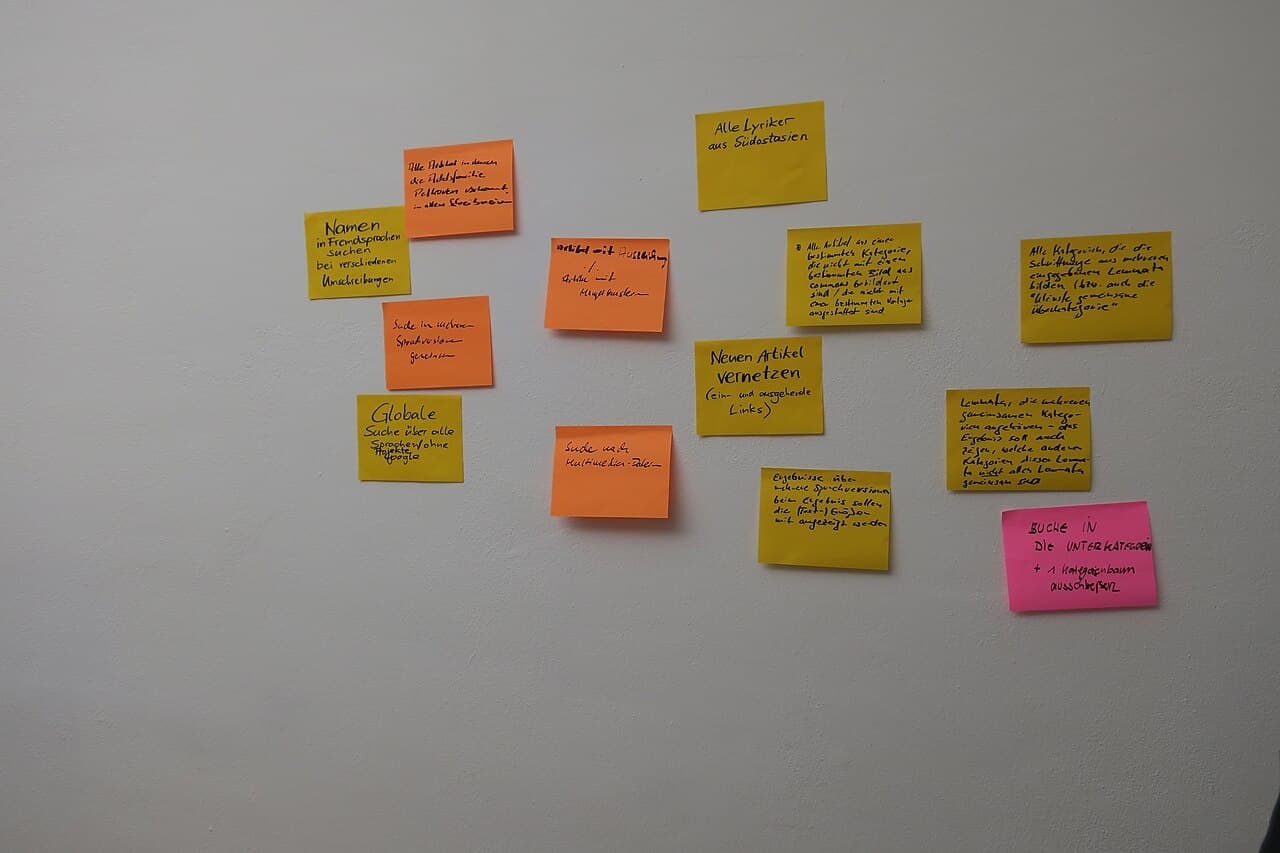
Search-needs workshop notes photographed at WikiMuc in 2016 by Jan Dittrich (WMDE), CC BY 4.0. Used as a planning illustration, not a JASOTO customer workshop or an AI system. Wikimedia display copy; no editorial crop.
AI can help organise permitted notes, suggest wording or prepare alternative outlines. Keep a person responsible for facts, customer commitments and the final output.
Key checks for ai for a small business
- Start with a low-impact internal task.
- Compare the result with original source material.
- Record checking time so claimed savings reflect the whole workflow.
Keep facts separate from generated wording
Prepare a short facts block using approved information, then ask for one defined output such as an outline or draft message. Check every factual statement against that block. If the tool adds a price, promise or feature, remove it unless you can verify it.
Assign responsibility for the final result
A person should decide whether the output is suitable for the audience and business. Include time for checking privacy, accuracy and tone in any assessment of savings. Start with an internal task and expand only when the workflow has shown reliable value.
Which small-business jobs are suitable for an AI draft?
Begin by looking for a task whose source information is already understood and whose output someone can check. An internal outline of an approved service explanation is a better starting point than a promise about an unfamiliar customer request. Write down the input, the requested result and the person responsible for reviewing it. If nobody can explain what a correct answer would contain, define the work more carefully before introducing another tool.
For a hypothetical garden-maintenance business, the first task could be organising its approved seasonal service notes into a staff briefing. The source might distinguish routine maintenance from work the business does not offer. The draft must preserve that distinction. This example describes a possible process, not a JASOTO customer result or a claim that a particular subscription improves productivity.
Map the work before changing it
Follow one normal task from arrival to completion. Record where the information comes from, who checks it, which decision follows and where the finished record belongs. Include informal steps such as a colleague asking the owner to confirm an exception. Those conversations may carry important context that does not appear in the document you intend to supply to an assistant.
Mark the step you actually want to improve. Perhaps staff spend time reorganising notes before the manager checks them; perhaps they repeatedly search for the same approved explanation. Keep the rest of the process visible. Saving time on an outline has little practical value if nobody knows which version is approved or the result cannot be found when the next enquiry arrives.
Create an approved source sheet
Prepare a small source sheet for the chosen job. Give it a descriptive title, an owner and a review date. Use current business facts, including relevant limits and the next step for an unanswered question. In the gardening example, the sheet might explain how staff arrange an assessment and which details they need before the owner can decide whether the job fits the service.
Keep unknown facts visible as questions. Do not turn an estimated appointment window into confirmed availability or an informal suggestion into a published price. Store the source separately from generated drafts so corrections can be made at the origin. When the facts change, identify the outputs that need reviewing rather than assuming that an earlier conversation with a tool automatically updates every later document.
Practise with fictional information first
Use an invented enquiry that contains no real customer details when practising the workflow. Include enough context to test the task, but do not copy a real message and assume changing its name resolves every information-handling concern. Decide what the application actually needs. A request to reorganise an approved public explanation may work without any customer record at all.
The joint small-business guidance published by New Zealand NCSC and its partners identifies information leakage, unreliable outputs and supplier risks. Use those topics to frame questions about the service you are considering. It is international cyber-security guidance, not a complete statement of UK legal obligations. Assess the actual account, information and proposed use with the responsible person before moving beyond the fictional exercise.
Specify the output and the stopping point
Write an instruction that defines the audience and the output. For the internal briefing, ask for a short outline using only the approved service sheet, followed by unanswered questions for the manager. Explain what should happen when the source does not contain an answer. A useful draft can explicitly leave a gap; a confident invented answer creates more checking work.
Also describe where the process stops. Preparing wording is a different task from sending a customer reply, changing a booking or publishing a page. Keep a review step before an external action. Record that boundary with the instructions so a colleague does not interpret a successful drafting exercise as permission to connect the tool to every business account.
Use an exception log to improve the process
During the trial, keep a short list of situations that did not fit the instructions. An enquiry may concern an excluded service, contain conflicting details or ask for a commitment that only the owner can make. Record what information was missing and how the reviewer resolved it. Avoid placing unnecessary personal details in the log; its purpose is to improve the working method.
Look for repeated causes. If the same service boundary is misunderstood, clarify the approved source before adding a more complicated instruction. If reviewers disagree about the right next step, resolve that business question together. The exception log is useful even when you stop the AI trial because it exposes gaps that would also affect a new employee following the existing process.
Check the result against the source line by line
Treat a fluent draft as material to review. Compare its factual statements with the approved source, then check whether it kept the important limits. In the gardening example, the manager should notice if an assessment requirement disappears or if wording implies that a specialist service is available. Check numbers, names, dates and the meaning of any rewritten condition.
Review tone after factual accuracy. A friendly explanation can still be unsuitable if it sounds as though a decision has already been made. Where a draft combines several source points, make sure the relationship between them remains correct. Keep a small annotated example of an acceptable result so another reviewer can see the required standard rather than guessing what the original tester preferred.
Measure completed work instead of generated text
Compare the full task with the method your team already uses. Include preparation, checking, corrections, approval and storing the final version. Record who does that work. If an assistant produces an outline quickly but the owner spends longer repairing it, the first response time does not describe the business benefit. Keep the quality requirement consistent across the comparison.
A simple trial record can contain the task, source version, reviewer, completion time and corrections required. Separate one unusually easy example from a repeatable improvement. Use the record to choose whether to adopt the method for that task, change the instructions or stop. Do not convert a handful of examples into a percentage saving or a forecast of extra customers.
Turn repeated customer questions into useful explanations
Staff may notice that customers repeatedly ask what information to prepare before requesting an assessment. Collect the underlying questions without exposing the messages or identifying the people who sent them. Ask the responsible team member to confirm the actual answer, including limits and exceptions. An assistant can help arrange that approved explanation into a draft, but the business supplies the facts.
Choose a page that fits the question before creating another article. Improving an existing service explanation may make the answer easier to find and maintain. Add a clear heading, a direct answer and a practical next step. Use a genuine example with permission or label a worked example as hypothetical. Extra paragraphs should help a reader make a decision, not merely increase the page length.
Keep business listings consistent with the approved facts
If you prepare wording for a directory profile, compare the name, contact route, service area and opening arrangements with the business records. Identify who can approve each detail. An assistant should not infer an office address, a new location or a service from a competitor description. A directory profile and an independently managed search-business profile are separate records that may each need correcting.
Google Business Profile guidance calls for an accurate real-world business representation. Apply that principle when reviewing your approved listing facts, while following the rules of each actual publishing service. Keep a record of where an update was made and where it remains pending. That makes later corrections manageable without pretending that publishing one listing verifies or changes every other profile on the internet.
Publish answers that search systems can actually reach
A useful public answer needs an accessible page and a working route from the rest of the website. Ask the person maintaining the site to check that ordinary visitors can read the answer, follow its links and reach the correct contact step. Confirm that the page is not accidentally hidden behind a login, a broken redirect or an unintended indexing restriction.
For Bing and search-based assistants, keep the question, the answer and its supporting sources clear. Accurate structured data can describe the visible page; an XML sitemap can help engines discover its canonical URL. These are maintenance tasks, not promises of a citation. Bing distinguishes reported AI citations from ranking and placement. Review actual visits and suitable enquiries separately from any observed citation count.
Give colleagues a repeatable handover
Before adopting the workflow, ask someone who did not design it to follow the saved instructions. Give them the approved source, the review checklist and an example of an unsuitable result. Watch where they need extra explanation. Add missing context to the working instructions rather than relying on the original tester to remain available for every question.
Choose a review point and a person who can suspend the method if errors become frequent or the task changes. Keep the normal business record outside an abandoned trial workspace. When ending a trial, review the actual export, cancellation and account-connection arrangements. The useful outcome is a maintained process with clear responsibility, even if the final decision is to keep doing the task without AI.
Separate staff instructions from a public answer
The internal record can contain the review responsibilities, unresolved questions and the reason a particular reply needs approval. The customer-facing explanation should contain the useful service facts and the next step. Decide which audience each document serves before asking an assistant to condense it. Otherwise a draft may expose internal discussion or remove context a reviewer needs.
For the garden-maintenance example, a staff note might say that an unusual request must go to the owner. The public page can instead explain how to request an assessment and which information to prepare. Both descriptions should reflect the same approved process, while giving each reader the information needed for their own decision.
Before you book or buy
- Start with a low-impact internal task.
- Compare the result with original source material.
- Record checking time so claimed savings reflect the whole workflow.
Frequently asked questions
Where should I start with ai for a small business?
AI can help organise permitted notes, suggest wording or prepare alternative outlines. Keep a person responsible for facts, customer commitments and the final output.
Which details should I check before committing?
Start with a low-impact internal task. Compare the result with original source material. Record checking time so claimed savings reflect the whole workflow.
What is a sensible first AI task for a small business?
Choose a bounded draft or internal outline using approved facts, with a named reviewer who can recognise a correct result. Practise with fictional information first.
Can an assistant confirm a price or booking for my business?
A drafting trial does not establish that authority. Keep the responsible person in control of factual commitments and assess any proposed external action separately.
What should I record during a trial?
Keep the source version, task, reviewer, corrections and full completion time. Use the record to decide whether the workflow is useful at the same quality standard.
Does publishing AI-assisted content guarantee search citations?
No. Review usefulness, factual accuracy, sources and public access. Observed citations, visits and suitable enquiries are different measurements.
Continue with JASOTO
Compare your next step
Discover UK businesses, compare services and request written quotes before making a decision.