
Business & Marketing · UK Guide 2026
How to Get More Local Customers in the UK
JASOTO · Updated November 5, 2026 · 2,168 words
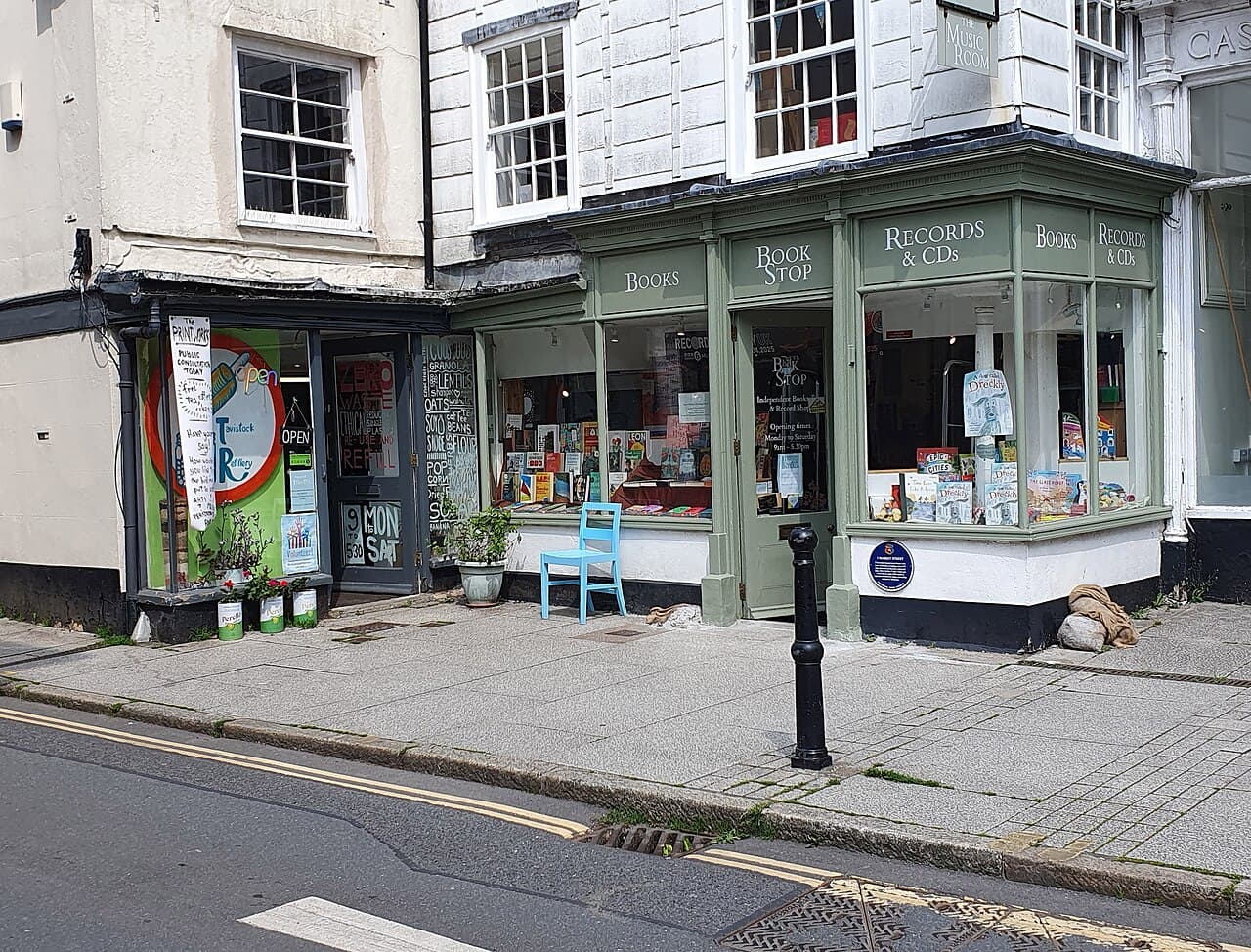
Market Street shopfronts in Tavistock, photographed by Mutney on 3 May 2025, CC BY 4.0. Archival local-shopping illustration; not a JASOTO customer case study, endorsement or confirmation of current shop details. Official Wikimedia display copy; no editorial crop.
Check that people can understand the service, see the area covered and contact the business easily. Then test one local channel at a time and track suitable enquiries.
Make discovery lead to a suitable enquiry
- Keep hours and contact details accurate.
- Show relevant work with permission.
- Record enquiry source and whether it became a booking.
Match the page to the service area
Explain what you do, where you genuinely work and how a customer can enquire. Include relevant examples with permission and make the contact route easy to use on a phone. Accuracy and a clear offer give local visitors a reason to take the next step.
Test one change at a time
Choose a channel or page change and record the resulting suitable enquiries. Note whether your response time and availability helped or prevented a booking. Review the whole journey before increasing spending; more visitors do not resolve an unclear offer or an unreliable follow-up process.
Define the local enquiry you can actually serve
Start by describing the work you want to receive and the customers for whom it is suitable. A hypothetical mobile bicycle-repair business might accept maintenance visits within a real operating area, while referring other work elsewhere. Record what the team can assess, what information it needs and which requests require a conversation before any commitment. Keep that description beside your marketing plan.
Separate a useful enquiry from a completed booking. A visitor may ask an appropriate question even when your next available appointment does not suit them. Record that distinction so you can see whether the problem is discovery, the explanation, availability or follow-up. The bicycle example is a planning exercise, not a JASOTO customer case study or evidence of a particular growth result.
Keep one approved record of business facts
Prepare an owner-approved record containing the business name, contact route, current opening arrangements, genuine service area and the services you actually offer. Add who checks each detail and when it was reviewed. A team member should be able to find the answer without reconstructing it from an old advert. Mark uncertain information for confirmation rather than filling a gap with a plausible claim.
Use that record when reviewing your website and the listings you manage. Keep a list of the actual places where an update has been made and those still awaiting correction. If a telephone number changes, test the new route before marking the work complete. Updating one directory does not establish that every independent business profile or search result has also changed.
Make the service area understandable
Explain where you genuinely operate and any practical limits relevant to an enquiry. For the mobile repair example, access to the bicycle, the type of work and the travel arrangements might affect suitability. Say which details customers should send so the business can assess the request. Avoid presenting a long town list as proof that you can accept every job in every location.
Google Business Profile guidance calls for an accurate real-world identity and precise address or service-area information. Apply the rules for the service you are editing. A public customer-facing premises and a business that travels to customers are different situations. Do not invent an office address to appear nearer to a searcher, or assume that a directory entry verifies ownership of a separate Google profile.
Walk through the journey on a phone
Open the public page as a visitor would and try to understand the offer before contacting the business. Check whether the important explanation is readable, whether the contact link reaches the right destination and whether a form explains what happens after submission. Use permitted test information and a clearly identified internal test instead of creating an enquiry that another colleague mistakes for a real job.
Review the response as part of the same journey. The person handling an enquiry should know which service the visitor was reading and which facts still need confirmation. If customers routinely telephone to ask what a confusing form field means, revise the instruction before buying more traffic. A working page is useful only when the handover supports the next decision.
Answer the questions that delay suitable enquiries
Keep a short, non-identifying list of repeated questions received by the team. Group them by the decision they affect: suitability, what to prepare, how an assessment works or how the next step is arranged. Ask the responsible person to confirm the answer. Do not publish private messages or treat one unusual request as evidence that every customer needs the same explanation.
Improve the page closest to that question. A service page may need a clear explanation of assessment limits rather than another broadly similar blog. Use a direct heading, an accurate answer and a useful next step. Where an example is fictional, label it. Where a fact changes, identify who updates it. Extra length should resolve uncertainty for the reader.
Show relevant evidence with a clear context
Choose photographs and examples that genuinely help someone understand the work. Keep permission and rights records where appropriate, and explain what the picture represents. A stock photograph can illustrate a topic, but it should not be presented as your completed customer project. An archival shopfront image does not establish present opening hours or the current services of the business shown.
For your own work, describe the relevant scope and limitations rather than attaching an unsupported success claim. A photograph of a repaired component may explain the type of task, while leaving the final assessment of another bicycle open. Keep identifying customer information out of the example unless its use has been appropriately agreed. The visitor needs context they can assess.
Maintain useful business listings
Choose listings that are relevant to your customers and keep their information accurate. Review the actual public profile, not just a confirmation email from the editing tool. Check the category, service explanation and contact destination against the approved facts. A category that sounds popular but misrepresents the work can attract unsuitable enquiries and leave customers with a misleading expectation.
For Bing discovery, Microsoft's guidance points local businesses towards accurate address, hours and contact details and Bing Places for Business. Treat that as a maintenance responsibility rather than a promise of an AI citation. Keep your website and the profiles you control consistent, while following the eligibility and editing rules of each service. Record where you lack access so a correction can be assigned.
Give search systems a clear public page
Ask the person maintaining the website to check that a normal visitor can reach the service explanation through ordinary links. Verify that the page is not accidentally behind a login or an unsuitable redirect. If an established URL changes, agree what should happen to existing links. Keep the preferred public address clear when the same material is accessible through more than one domain.
An XML sitemap can help search engines discover the canonical pages you want them to know about. Google's sitemap guidance explains the supported formats and how to make the file available. Ask for a check against the actual published URLs, including the recently changed page. Listing an address in XML does not guarantee that it will be indexed, ranked or selected as an answer source.
Use structured data to describe visible facts
Structured data gives software an explicit description of page content. Ask your developer which supported type fits the actual page and whether its properties match the information a visitor can read. Keep the business identity and contact details accurate. A blog article, a business profile and a service explanation are different publishing contexts; adding more labels does not make unsupported claims reliable.
Check the result after publication, including the visible content and the markup together. Do not add an invented rating, an unverified office or a service you do not provide. Google describes structured data as a way to help it understand page content and relevant search features. It is not a special certificate of quality or a guarantee of an assistant recommendation.
Make a small channel experiment
Choose one change with a clear reason and a manageable review period. You might improve the enquiry explanation on a relevant page, correct a listing or test a permitted local promotion. Record the starting condition, the work done and what would count as a useful outcome. Keep other major changes visible so a later comparison does not assign every difference to one edit.
Use a budget you can review against the actual work and stop conditions. If paid promotion is involved, confirm the destination page and enquiry handling first. More arrivals will not repair a broken contact route. Keep the example hypothetical until real records exist; do not turn a demonstration, a provider's forecast or a very small sample into a claimed return on spending.
Ask how the customer found you without forcing an answer
Offer a simple way to record the source of an enquiry where appropriate. A customer may remember a recommendation but not the page they later visited. Keep that uncertainty instead of choosing the channel you hoped to measure. Distinguish the first discovery from the final contact route if the available information supports it, and avoid collecting unnecessary personal details for a marketing worksheet.
Review suitable enquiries, responses and bookings separately. A visitor counter cannot explain whether the business had capacity or replied clearly. Keep equivalent date ranges and definitions when comparing results. If your reporting changes during the experiment, note the change. The useful question is which part of the customer journey improved, not which chart can be made to show the largest increase.
Help a referral become an informed introduction
Give existing customers or local contacts a clear public explanation they can share voluntarily. It should describe the genuine service, area and enquiry process without requiring them to make promises on your behalf. In the repair example, a link explaining the information needed for an assessment is more useful than a vague instruction to tell every cyclist that all repairs are available.
Keep commercial relationships and any relevant promotional arrangements clear. Do not manufacture recommendations or present an associated business as an independent endorsement. If someone introduces an unsuitable request, use the feedback to clarify the explanation rather than blaming the person who referred it. The aim is an accurate introduction that lets the next visitor decide whether to contact you.
Separate assistant visibility from business outcomes
If Bing or another service reports citations, record the actual measure and its limits. Microsoft's AI Performance reporting distinguishes observed citations from ranking or placement within an answer. A citation is also different from a website visit or a suitable enquiry. Keep those records separate so a report does not imply that an assistant produced customers merely because it referenced a page.
Use the evidence to decide what to improve next. If people reach the right explanation but remain confused about the enquiry process, work on that process. If the page cannot be discovered or accessed, investigate those issues. Keep the source facts, review date and responsible editor clear so a useful answer remains accurate after the business changes.
Review the process after a practical business change
Revisit the public information when services, staff availability or contact arrangements change. Test the customer journey again rather than assuming that an old check still covers a newly connected form or booking tool. Keep a short change record that another colleague can understand, including the page or profile updated and the person who confirmed the facts.
End each experiment with a decision: retain the change, revise it and review again, or stop. Describe the evidence and the limitations without inventing a ranking result. A smaller number of suitable enquiries that the team can handle may be more useful than a larger stream of requests outside scope. Maintain the approved facts and response process alongside any marketing activity.
Before you book or buy
- Keep hours and contact details accurate.
- Show relevant work with permission.
- Record enquiry source and whether it became a booking.
Frequently asked questions
Where should I start when trying to reach more local customers?
Check that people can understand the service, see the area covered and contact the business easily. Then test one local channel at a time and track suitable enquiries.
Which business details should I check first?
Keep hours and contact details accurate. Show relevant work with permission. Record enquiry source and whether it became a booking.
What should I fix before spending on local promotion?
Check the actual service explanation, genuine service area, public contact route and response process. Test the complete enquiry journey before trying to increase arrivals.
Does changing one listing update every business profile?
No. Keep a record of the publishing services you manage and verify corrections on each actual public profile. Do not assume that one directory controls independent profiles elsewhere.
Does structured data or a sitemap guarantee customers?
No. They can help describe content or support discovery, but indexing, ranking, citations, visits and suitable enquiries are separate matters. Measure the outcomes actually available.
What should I record when testing a local channel?
Record the starting condition, change, dates, appropriate costs and suitable enquiries, responses and bookings separately. Leave uncertain attribution unresolved instead of assigning a source without evidence.
Continue with JASOTO
Compare your next step
Discover UK businesses, compare services and request written quotes before making a decision.